
This is the ultimate grand tour, a 12-day journey that starts and ends in historic Fes to show you every facet of Morocco. From the spirituality of Fes, we take you to the vast Sahara, vibrant Marrakech, the bohemian Atlantic coast of Essaouira, and northern gems like Chefchaouen and Rabat. If you want to see it all, this is your adventure.
Highlights
- ✦A full grand circuit that begins and ends in Fes.
- ✦Guided visits in the imperial cities of Fes and Marrakech.
- ✦Two nights in the desert for a complete immersion.
- ✦Day trip to the charming coastal city of Essaouira.
- ✦Explore the "Blue Pearl" of Chefchaouen.
- ✦Visit UNESCO sites including Ait Ben Haddou and Volubilis.
Detailed Itinerary
Day 1: Arrival in Fes
We welcome you at Fes-Saïss Airport and transfer you to your riad in the heart of the medina — the ancient walled city of Fes el-Bali, a UNESCO World Heritage site whose nine thousand lanes form the most complete surviving medieval Islamic city in the world. The riad itself is an introduction to Moroccan domestic architecture: a carved-plaster portal opens onto a central courtyard of mosaic fountain, orange trees, and shaded arcades that filter the noise of the medina to a distant murmur. Depending on your arrival time, an evening walk along the outer edge of the medina — where the scent of cedar and spice drifts from the workshops, and the minarets of fourteen hundred mosques begin their sunset call — offers an unforgettable first encounter with a city that has functioned continuously since the ninth century under the Idrisid dynasty.
Day 2: Guided Tour of Fes
A licensed local guide devotes the full day to Fes el-Bali, a UNESCO World Heritage medina that has functioned since its founding under the Idrisid dynasty in 809 AD and whose complexity, density, and historical integrity are unmatched in North Africa. We begin at the Bou Inania Madrasa, the fourteenth-century Marinid theological college built under Sultan Abu Inan Faris, whose interior is the canonical expression of the Moroccan decorative arts at their most ambitious: zellige mosaic tilework covers the ground-floor walls in geometric star patterns, above which carved stucco arabesque rises in dense interlocking fronds, topped by cedar muqarnas ceilings and mashrabiya screens of lathe-turned woodwork — a three-register decorative system that defined Moroccan interior architecture for centuries. The Chouara tannery, established at this site since at least the eleventh century, fills its circular stone vats with the same sequence of lime, pigeon dung, and plant dyes — henna, saffron, poppy, and indigo — that medieval tanners used, best viewed from the leather-shop balconies above. We also pass by Al-Qarawiyin, founded in 859 AD and recognised as the world's oldest continuously operating university.
Day 3: Fes → Ifrane → Merzouga Desert
The great southbound adventure begins as we leave Fes and climb into the Middle Atlas, Morocco's forested central highland massif that forms the climatic and geographic backbone of the country. We stop in Ifrane, a small university town at 1,650 metres elevation whose steeply pitched chalet-style architecture and manicured public gardens were built by the French Protectorate administration and now serve Morocco's premier mountain resort community. Continuing through the cedar and holm-oak forests around Azrou, we look for Barbary macaques — the only wild primate in North Africa, classified as vulnerable by the IUCN — which often gather in relaxed groups along the roadside or move through the cedar canopy in clear view. The Ziz Valley, one of Morocco's most photographed landscapes, unfolds below us as we descend: a long corridor of dense palmery watered by snowmelt from the High Atlas, its ancient ksar villages and earthen agadir granaries rising from the palm canopy against canyon walls of ochre limestone. As the day ends, the arid hammada plateau brings us to Merzouga and Erg Chebbi, where our camels are waiting to carry us across the dunes to the desert camp at sunset.
Day 4: Merzouga Desert Exploration
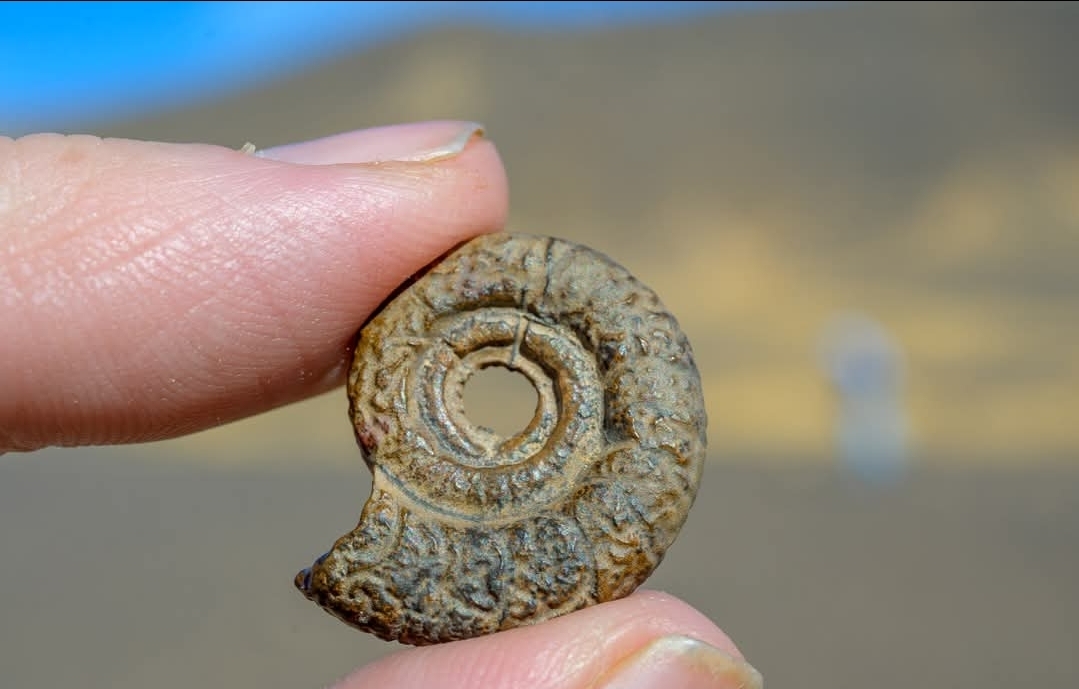
Before sunrise we climb a high dune on foot to watch the light break over Erg Chebbi — the slow theatrical transformation of the sand from deep purple to violet to burning gold as the sun clears the eastern horizon is one of the most quietly spectacular natural events in Morocco, and one that draws travellers back to the Sahara year after year. After a camp breakfast and the return camel ride, we board a 4x4 for a full day of exploration in the surrounding desert and pre-Saharan landscape. The village of Khamlia, a community of Gnawa heritage from sub-Saharan Africa, offers an intimate live performance of their sacred music tradition — performed on the guembri three-string bass lute and iron qraqeb castanets — whose spiritual healing practices were recognised by UNESCO as Intangible Cultural Heritage in 2019. We visit a nomadic Berber family in the open hammada, sharing mint tea and learning about their seasonal migration patterns and livestock traditions, then spend the afternoon searching the surrounding Paleozoic rock formations for ammonite, trilobite, and orthoceras fossils before returning to camp for a second night beneath the stars.
Day 5: Merzouga → Todra Gorges → Dades Valley
We wake to the final desert sunrise before packing up and heading west along the Route of a Thousand Kasbahs, a road whose name evokes the density of earthen fortified towers that once guarded the trans-Saharan caravan routes between sub-Saharan Africa and the Mediterranean ports. The day's most dramatic stop is the Todra Gorges, where the Todra River has carved a vertical slot canyon through towering walls of rose-red limestone rising nearly 300 metres from the narrow valley floor. We walk through the gorge's most breathtaking section — where the canyon narrows to barely ten metres across and the rock walls above seem to lean inward — a formation that has made Todra one of North Africa's premier rock-climbing destinations, its walls bearing the chalk and bolt marks of climbers from across the world. We continue west through lush palmeries and past fortified ksar villages sustained by ancient underground khettara irrigation channels to the Dades Valley, where terraced Damask rose gardens — the source of the rose-water and rose oil for which this valley is celebrated — cling to the canyon walls. Dinner and overnight at a guesthouse above the gorge.
Day 6: Dades Valley → Ait Ben Haddou → Marrakech
We drive west through the upper Dades Gorges — the eroded limestone spires and sculpted rock formations of the valley's upper reaches providing a dramatic opening to a day of iconic Moroccan landscapes — before reaching Ouarzazate, the desert city that has served as the gateway to the Sahara for Morocco's thriving film industry since the 1960s. Known as the "Hollywood of Africa," Ouarzazate's extraordinary light, desert-meets-mountain landscape, and Atlas Corporation Studios have hosted major productions including Lawrence of Arabia, Gladiator, Babel, and Game of Thrones. A short drive away, Ait Ben Haddou is the UNESCO World Heritage fortified ksar that perhaps more than any other monument embodies the architectural heritage of southern Morocco: its layered towers of earthen pisé — honey-coloured, crenellated, rising in dramatic tiers above the dry Ounila riverbed — represent the finest surviving example of the pre-Saharan ksar building tradition. After exploring on foot, we cross the High Atlas via the Tizi n'Tichka pass at 2,260 metres and descend into Marrakech.
Day 7: Guided Tour of Marrakech
A licensed local guide spends the full day revealing the history and culture of Marrakech, Morocco's most visited city and a UNESCO World Heritage site in the making. We begin at the Bahia Palace, whose name means "brilliance" — the nineteenth-century residence of Ba Ahmed, grand vizier to three sultans, its forty rooms of painted cedar ceilings, zellije mosaic floors, and ornamental gardens of orange, jasmine, and banana trees are among the finest achievements of late Moroccan palace architecture. The Saadian Tombs, sealed by royal decree in the seventeenth century and hidden under successive buildings until their aerial rediscovery in 1917, preserve the remains of Saadian dynasty royalty beneath the Chamber of the Twelve Columns, whose carved Italian Carrara marble, gilded stucco, and cedar muqarnas represent Moroccan decorative art at its most refined. We navigate the labyrinthine souks — each quarter dedicated to a single artisan tradition, exactly as in the medieval guild system — before emerging onto Jemaa el-Fnaa, the great open square whose living culture of storytellers, musicians, acrobats, and food vendors is recognised by UNESCO as Intangible Cultural Heritage.
Day 8: Day Trip to Essaouira
We head west from Marrakech through the haouz agricultural plain and the UNESCO-biosphere arganeraie — the forest of endemic argan trees found only in southwestern Morocco, from whose thorny fruits Berber women's cooperatives produce the prized argan oil used in both gourmet cuisine and luxury cosmetics worldwide — arriving on the Atlantic coast after roughly two and a half hours in the port city of Essaouira. Founded as a fortified trading town in the eighteenth century by Sultan Sidi Mohammed Ben Abdallah and designed by French engineer Théodore Cornut, the medina's UNESCO World Heritage status reflects its unique architectural fusion of Portuguese fortification, Andalusian urban planning, and Moroccan craft traditions. We walk the ocean-facing skala rampart with its historic cannons and views over the wild Atlantic and the offshore Île de Mogador — a protected bird sanctuary — before exploring the blue-shuttered medina lanes, the bustling fishing port, the thuya-wood marquetry workshops, and the argan oil cooperative, returning to Marrakech in the late afternoon.
Day 9: Marrakech → Casablanca → Rabat
We leave Marrakech and drive north along the Atlantic-facing motorway, the landscape shifting from the haouz plain to the coastal arganeraie as we approach Morocco's economic capital. In Casablanca, we stop at the Hassan II Mosque on its dramatic Atlantic promontory — built between 1986 and 1993 under King Hassan II and designed by French architect Michel Pinseau, it is the seventh-largest mosque in the world, its 210-metre minaret the tallest religious structure on earth, and the only mosque in Morocco open to non-Muslim visitors. The prayer hall accommodates 25,000 worshippers under an enormous retractable roof, and sections of the floor are made of glass so worshippers can see the Atlantic breaking below — an engineering and spiritual achievement of extraordinary ambition. After time on the oceanfront esplanade, we continue north along the coast to Rabat, Morocco's elegant and underappreciated capital, for the night.
Day 10: Rabat → Chefchaouen
We spend the morning in Rabat's UNESCO-listed historic quarter, exploring monuments that together represent some of the finest medieval and modern Moroccan architecture in the country. The Hassan Tower — the unfinished twelfth-century minaret of Sultan Yacoub al-Mansour's vast Friday mosque, surrounded by 200 ancient stone columns — stands beside the Mausoleum of Mohammed V, its white onyx interior housing the tombs of Morocco's first post-independence king and his two sons beneath a hand-carved ceiling, guarded by royal sentinels in traditional red robes. We walk through the old medina and down to the Kasbah of the Oudayas, the seventeenth-century fortified quarter above the Bou Regreg estuary whose blue-and-white painted Andalusian lanes and shaded garden recall the Moorish refugees who built their lives here after 1492. In the afternoon we drive north through the Gharb plain and into the Rif Mountains, arriving in Chefchaouen as the mountain light fades over the city's blue rooftops.
Day 11: Chefchaouen → Volubilis → Meknes → Fes
We spend the morning in Chefchaouen's extraordinary blue medina — a city painted in every shade of cobalt, periwinkle, sky blue, and indigo that has become one of Morocco's most recognisable images, its alleyways and stairways offering a new photograph at every corner. The Plaza Uta el-Hammam at the heart of the medina, framed by the sixteenth-century kasbah and a tall-minaret mosque, is the ideal spot for a final café breakfast with mountain views before we depart south. Our route takes us to Volubilis, the UNESCO-listed Roman archaeological site whose in-situ mosaic floors — the Orpheus mosaic, the Diana and Actaeon scene, the Dionysiac procession — are among the finest and best-preserved outdoor Roman mosaics in North Africa. We continue to the imperial city of Meknes, where Sultan Moulay Ismail's monumental Bab Mansour gate — covered in zellige panels and flanked by marble columns looted from Volubilis — opens onto a medina of vast royal stables, granaries, and a seventeenth-century city that once rivalled Versailles in ambition. We arrive back in Fes in the late afternoon.
Day 12: Tour Ends in Fes
The final morning of this grand circuit belongs to Fes — a city so layered with history, craft, and spiritual significance that it rewards every return visit. If time allows before your transfer, a last wander through the Andalusian quarter across the Bou Khrareb River — calmer and less touristic than the main medina — reveals potters' workshops, neighbourhood hammams, and the Andalusian Mosque built in the ninth century by the sister of Al-Qarawiyin's founder. A visit to the Nejjarine woodworkers' caravanserai museum in its beautifully restored seventeenth-century courtyard, or a quiet coffee at a rooftop café overlooking the medina roofscape of green minarets and ancient terracotta, provides a fitting farewell to one of the world's great historic cities. At the agreed time we transfer you to Fes-Saïss Airport for your departure, bringing this twelve-day grand circuit of Morocco to its conclusion.
This itinerary is intentionally paced to allow meaningful encounters: guided medina walks, village visits, and desert experiences are balanced with restful evenings in atmospheric riads. You will have time to absorb each place rather than simply transit through it.
Expect a variety of lodging styles — intimate guesthouses, traditional riads, and a desert camp night — all selected to enhance your experience and reflect the regions you visit. Hosts are vetted for comfort and genuine hospitality.
Culinary moments are woven into the trip, from street-side snacks to sit-down dinners featuring local recipes. We prioritize restaurants and hosts that focus on fresh, regional ingredients and traditional preparation methods.
Traveling across Morocco includes long scenic drives; we include interesting stops — kasbahs, markets, and panoramic viewpoints — to break journeys into rewarding segments and offer photographic opportunities.
If you'd like to extend this tour — for more desert time, a coastal detour, or an extra day in Fes — we can tailor the route to your interests and travel pace.