
This 10-day tour is the ultimate journey from the capital, Rabat, designed to show every facet of the kingdom. It is a grand loop that threads through imperial history, the vast Sahara, vibrant Marrakech, and the relaxed Atlantic coast of Essaouira. If you want the most complete Moroccan experience from Rabat, this is your tour.
Highlights
- ✦A complete circuit starting and ending in Rabat.
- ✦Explore the 4 imperial cities: Rabat, Meknes, Fes, and Marrakech.
- ✦Two nights in the Merzouga desert for a deeper experience.
- ✦Visit the bohemian coastal city of Essaouira.
- ✦UNESCO sites: Ait Ben Haddou, Volubilis, and the medinas of Fes, Marrakech, and Essaouira.
Detailed itinerary
Day 1: Rabat → Meknes → Volubilis → Fes
We depart from Rabat, Morocco's elegant capital since independence, whose UNESCO-listed medina, Hassan Tower, and Mohammed V Mausoleum represent some of the finest examples of Almohad and Alaoui architecture in the country. Our first stop is Meknes, another of Morocco's four imperial cities, where the grandiose ambitions of Sultan Moulay Ismail are still visible in the colossal city walls stretching over 40 kilometres and the monumental Bab Mansour gate — its facade decorated with intricate green and white zellige mosaic and marble columns taken directly from the nearby Roman ruins of Volubilis. At Volubilis, a UNESCO World Heritage Site since 1997, we walk through the most extensively preserved Roman ruins in Morocco: the triumphal arch of Caracalla, in-situ mosaic floors depicting mythological scenes, olive-pressing workshops, and colonnaded streets stretching across a hilltop plateau with commanding views of the Zerhoun mountains. We arrive in Fes by late afternoon and check into our medina riad.
Day 2: Guided visit of Fes
A licensed local guide meets us at our riad to lead a full-day immersion into Fes el-Bali, the UNESCO World Heritage medina founded in the 9th century under the Idrisid dynasty and still functioning as one of the world's largest car-free urban areas, its 9,000 lanes too narrow even for bicycles. We begin at the Bou Inania Madrasa, a 14th-century Marinid theological college whose three-register interior — a lower band of interlocking zellij mosaic, a carved stucco mid-section, and an upper tier of carved cedarwood screens and muqarnas — is considered the masterpiece of Moroccan decorative arts. Threading through the medina past spice merchants, coppersmiths, and weavers, we reach the Chouara tannery, the oldest in the city, where stone vats of natural dyes — saffron yellow, poppy red, indigo blue — and lime are visible from the leather-shop terraces above in a scene unchanged since the medieval period. We also pass the Al-Qarawiyin Mosque, founded in 859 AD by Fatima al-Fihri and recognised as the world's oldest continuously operating university.
Day 3: Fes → Ifrane → Merzouga Desert
We depart Fes and head south through a landscape that transforms dramatically with each hour of driving. Our first stop is Ifrane, a small alpine-style town perched at 1,665 metres in the Middle Atlas — its steep chalet rooftops, manicured parks, and cool mountain air are the legacy of the French Protectorate era, earning it the nickname "Little Switzerland of Morocco." Continuing through forests of Atlas cedar and holm oak where Barbary macaques — the only wild primates in Africa north of the Sahara — gather along the roadside, the terrain grows increasingly arid as we descend toward the Tafilalet basin. We pass through the spectacular Ziz Valley, a palm-fringed oasis corridor where tens of thousands of date palms follow the river through a canyon of red cliffs, flanked by ancient ksar villages once positioned to control the trans-Saharan trade routes. Arriving in Merzouga as the afternoon light turns golden, we mount our camels and ride through the towering Erg Chebbi dunes to our desert camp for the night.
Day 4: Merzouga Desert exploration
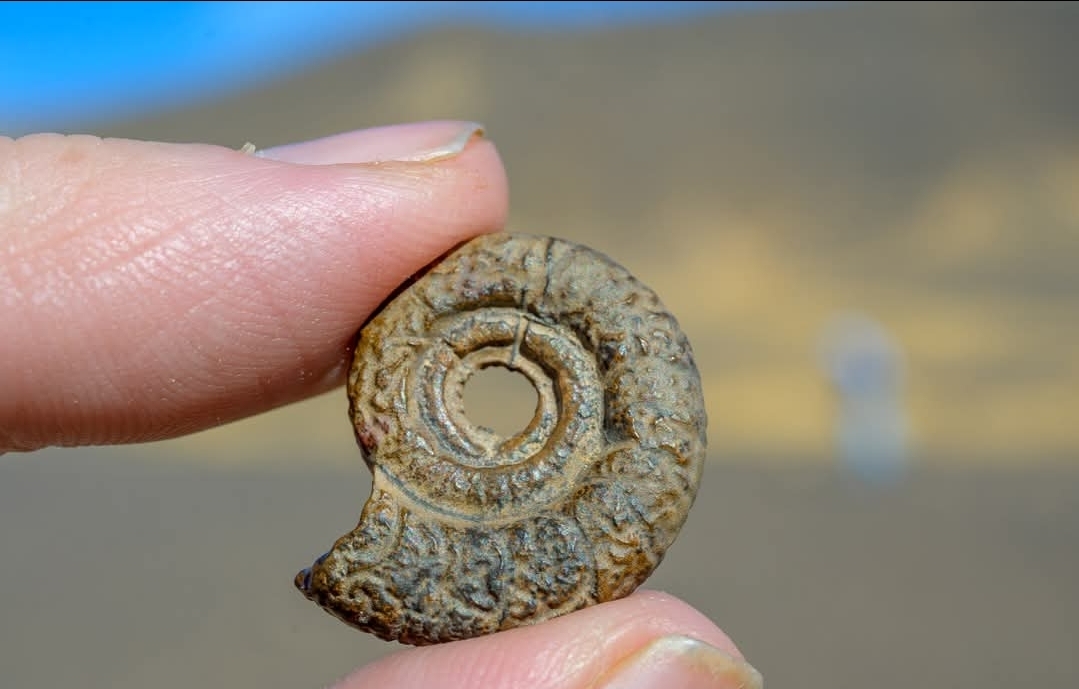
Before dawn we climb a dune on foot to watch the Saharan sunrise — a slow, theatrical flooding of colour from deep indigo to burnt gold as the first light skims the corrugated surface of Erg Chebbi, whose highest dunes reach over 150 metres above the surrounding hammada. After breakfast at camp we board a 4x4 for a full day of exploration across the desert region. In the village of Khamlia we are welcomed by a community of Gnawa heritage whose ancestors were brought from sub-Saharan Africa centuries ago; their live performance on the guembri bass lute and iron krakeb castanets carries a spiritual intensity that UNESCO recognised in 2019 by inscribing the tradition on its Intangible Cultural Heritage list. We share mint tea with a nomadic Berber family in their tent, learning about seasonal migration patterns across these landscapes. The afternoon is spent in the fossil-rich hammada surrounding Merzouga, where ancient marine fossils — ammonites, trilobites, and orthoceras — embedded in rock reveal that this Sahara was once a prehistoric ocean floor. A second night under the desert stars follows.
Day 5: Merzouga → Todra Gorges → Dades Valley
After catching the spectacular Saharan sunrise over the dunes — a golden light that sweeps across the erg in silence — we pack up camp and set off northwest along the southern road. Our first major stop is the Todra Gorges, where soaring limestone cliffs rise up to 300 metres on either side of a narrow canyon carved by the Todra River. This dramatic gorge is a favourite for rock climbers and photographers alike. We walk through its narrowest point, feeling the cool, humid air trapped between ancient walls of rock, before continuing west along the celebrated Road of a Thousand Kasbahs. This historic route is lined with ancient mud-brick fortresses, lush palmeries, and traditional Berber villages that cling to ochre hillsides above the Draa and Dades rivers. As afternoon light turns golden, we arrive in the Dades Valley, nicknamed the Valley of Roses for its springtime rose harvests. Terraced gardens, almond groves, and the sculpted clay formations known as Monkey Fingers rise dramatically above the valley floor. We settle in for a peaceful dinner and an overnight stay in a local guesthouse.
Day 6: Dades Valley → Ouarzazate → Ait Ben Haddou → Marrakech
We begin the morning with a scenic drive through the upper Dades Gorge, winding past sharp switchbacks and eroded rock formations before heading west. Our first stop is Ouarzazate, the so-called "Gateway to the Desert" and the heart of Morocco's film industry. The city is home to the Atlas Film Studios, one of the largest in the world, where productions such as Lawrence of Arabia, Gladiator, and Game of Thrones were filmed. From here, a short drive leads us to Ait Ben Haddou, a UNESCO World Heritage Site of outstanding universal value. This extraordinary fortified village — a ksar — is a breathtaking cluster of layered earth towers, granaries, and winding alleys rising above a dry riverbed. We explore its narrow passages, climb to the panoramic viewpoint at the crown of the hill, and learn about centuries of trans-Saharan trade and Berber history. In the afternoon, we begin the long ascent over the High Atlas Mountains via the Tizi n'Tichka pass at 2,260 metres, one of the most scenic mountain roads in Africa. The views of snow-capped peaks, Berber mountain villages, and plunging valleys are extraordinary. We descend as the sun sets and arrive in Marrakech for the evening.
Day 7: Guided visit of Marrakech
A dedicated local guide accompanies us for a full-day immersion into the secrets of the "Red City." We begin at Jemaa el-Fnaa, the pulsing heart of Marrakech and a UNESCO-listed intangible cultural heritage site — a vast, chaotic square filled with storytellers, acrobats, musicians, henna artists, and the irresistible scent of grilled food and orange blossom. From there, we venture into the souks, a centuries-old labyrinth of narrow alleys where artisans craft copper lanterns, babouche slippers, argan cosmetics, and hand-woven carpets, each quarter specialising in its own trade. We visit Bahia Palace, a magnificent 19th-century riad complex with intricately carved stucco ceilings, painted cedar woodwork, mosaic tile courtyards, and fragrant gardens. We also explore the Saadian Tombs, a richly decorated royal necropolis sealed for three centuries and rediscovered in 1917, and pass through the mellah, Marrakech's historic Jewish quarter. The afternoon is left free to shop, sip Moroccan mint tea on a rooftop terrace overlooking the medina, or simply get pleasantly lost in the alleyways.
Day 8: Day trip to Essaouira
We rise early for the two-and-a-half-hour drive west across the Haouz Plain to Essaouira, a whitewashed Atlantic port city with a character all its own. Designated a UNESCO World Heritage Site for its exceptional blend of European and North African architecture, Essaouira's medina is compact, windswept, and deeply charming. Blue-shuttered doors, fish stalls, argan oil cooperatives run by women's collectives, and independent art galleries line its breezy streets. We walk along the 18th-century sea ramparts, where the wind rolls in cold and sharp off the Atlantic and bronze cannons still point out to sea. Below, the working harbour is a vivid scene of blue-painted wooden boats, nets strung to dry, and fresh fish grilled on open braziers on the quayside — one of the most atmospheric lunch spots in Morocco. The city is also famous for its relaxed, pressure-free vibe and a long tradition of attracting artists, musicians, and travellers seeking calm after the intensity of Marrakech. We return to Marrakech in the late afternoon, with time for a final dinner in the city.
Day 9: Marrakech → Casablanca → Rabat
The morning is entirely yours to enjoy freely in Marrakech — a last unhurried wander through the souks, a long riad breakfast, a hammam session for a traditional kessa scrub, or simply a coffee at a medina café as the city wakes up around you. Around midday we begin the journey north through the Moroccan heartland. Our route takes us into Casablanca, Morocco's largest city and economic capital, where we stop at the esplanade of the Hassan II Mosque — the seventh-largest mosque in the world and the only one in Morocco open to non-Muslim visitors. Its 210-metre minaret, the tallest religious structure on earth, rises dramatically from the edge of the Atlantic Ocean, and its vast marble prayer hall and retractable roof are engineering feats as remarkable as its spiritual significance. After a coffee stop with views of the oceanfront corniche, we continue north along the coastal highway to Rabat, arriving in the capital by evening for a final night.
Day 10: Departure from Rabat
After a leisurely final breakfast, and depending on your flight schedule, we transfer you from your hotel to Rabat-Salé Airport or, if needed, to Casablanca Mohammed V International Airport. Your private driver ensures a comfortable and timely transfer with no last-minute stress. If your flight departs in the afternoon, we can arrange time for a morning walk along the Udayas Kasbah and its Andalusian garden, or a stroll by the Bouregreg estuary before heading to the airport. It is a peaceful final moment in a city that marks both the beginning and the end of this grand Moroccan journey.
This itinerary is crafted to give you a broad yet satisfying view of Morocco, moving naturally from imperial culture to Saharan adventure and finishing with Atlantic light and sea air. The route feels varied without losing its sense of coherence.
Overnight stays have been chosen to reflect the regions you pass through, from traditional riads in historic centers to comfortable hotels and a memorable desert camp. The result is a trip that feels both authentic and easy to enjoy.
Meals along the way bring in the flavors of each region, with mountain dishes, desert cooking traditions, and fresh coastal influences creating variety from one stop to the next. Shared meals are also a chance to experience Morocco's warmth and hospitality.
Longer travel days are softened with purposeful breaks at viewpoints, kasbahs, and small villages, so the transition between cities becomes part of the discovery. The landscapes themselves are among the highlights of the tour.
If you would like to adjust the balance between city time, desert immersion, and coastal relaxation, this private route can be customized to suit your travel style. Extra nights or upgraded accommodation can easily be arranged.
What is included?
- Private transport throughout the circuit.
- English-speaking driver/guide.
- 9 nights of accommodation.
- Dinners and breakfasts as per itinerary.
- Camel ride and 4x4 excursion.
- Local guides in Fes and Marrakech.
What is not included?
- Flights, lunches, and drinks.
- Monument entrance fees.
- Tips and personal expenses.
Frequently asked questions
Is this tour very intense? It is a very complete tour covering long distances, but it is designed to be enjoyable, with multi-night stays in key places and regular stops.
Is this a good option for a first visit to Morocco? Absolutely. If you arrive and depart from Rabat, this circuit offers the most complete view of Morocco's culture, history, and landscapes.