
This is our most complete journey, designed for travelers who do not want to miss anything. In 12 days, you will dive into the magic of Morocco, exploring lively imperial cities, the vast Sahara, the cinematic Atlas landscapes, and the bohemian Atlantic coast. Get ready for the trip of a lifetime.
Highlights
- ✦In-depth exploration of the 4 imperial cities: Marrakech, Fes, Meknes, and Rabat.
- ✦Nights in the desert, the mountains, and on the coast.
- ✦Full Sahara experience: camel ride, luxury tent night, and 4x4 exploration.
- ✦Visit the "Blue Pearl" of Chefchaouen and the Roman ruins of Volubilis.
- ✦Relaxing days in the charming coastal city of Essaouira.
- ✦A route through kasbahs, valleys, and spectacular scenery.
Detailed itinerary
Day 1: Arrival in Marrakech
We meet you at Marrakech Menara Airport and transfer you directly to your riad in the heart of the old medina — a traditional Moroccan courtyard house of carved plasterwork, mosaic fountains, and shaded inner gardens that immediately immerses you in the city's architectural soul. Depending on your arrival time, we encourage an early evening walk to Jemaa el-Fnaa, the great central square of Marrakech that UNESCO has designated an element of humanity's Intangible Cultural Heritage. As the late-afternoon light warms the surrounding rooftops and the first food stalls kindle their charcoal, the square fills with Gnawa musicians in vivid robes, storytellers performing in Darija, snake charmers, acrobats, and juice vendors — an open-air theatre that has functioned in essentially this form for a thousand years and remains utterly unlike anywhere else on earth.
Day 2: Guided visit of Marrakech
A licensed local guide spends the full day revealing the layers of Marrakech's history, beginning at the nineteenth-century Bahia Palace, whose name means "brilliance." Built for Ba Ahmed, grand vizier to three successive sultans, its forty rooms of hand-painted cedar ceilings, ornamental gardens of orange and jasmine, and intricate zellije mosaic floors are among the finest examples of late-Moroccan palace architecture. The Saadian Tombs, sealed on the orders of Sultan Moulay Ismail in the seventeenth century and only rediscovered in 1917, preserve the Saadian royal family beneath the Chamber of the Twelve Columns, whose carved Italian Carrara marble, gilded stucco, and cedar muqarnas represent the decorative peak of the Saadian dynasty. We then explore the souks — each quarter devoted to a specific craft guild from woodcarvers and weavers to dyers and coppersmiths — before finishing on the vibrant Jemaa el-Fnaa as the evening performance begins to build.
Day 3: Marrakech → Ait Ben Haddou → Dades Valley
Departing early, we begin the spectacular crossing of the High Atlas via the Tizi n'Tichka pass at 2,260 metres elevation — Morocco's highest paved road, where each hairpin turn reveals wider panoramas of rocky peaks, deep gorges, and Berber villages clinging to the flanks of mountains that reach above 4,000 metres. As we descend into the arid pre-Saharan south, the green terraces of the Atlas give way to a lunar landscape of mineral ochre and clay. We arrive at Ait Ben Haddou, the UNESCO World Heritage fortified ksar rising in tiers of earthen pisé above the Ounila River — its honey-coloured towers and crenellated ramparts have appeared in Gladiator, Game of Thrones, and dozens of other international productions. Crossing the riverbed on foot, we explore the ksar's interior lanes, rooftop viewpoints, and ancient granary before continuing through the Skoura oasis and the Valley of Roses to the Dades Valley for an overnight stay in a guesthouse perched above the gorge.
Day 4: Dades Gorges → Todra Gorges → Merzouga Desert
The morning begins with a scenic drive deeper into the upper Dades Gorges, whose extraordinary eroded limestone formations — known locally as the "monkey fingers" or "lion's paws" — rise from the valley floor in organic, wind-sculpted shapes that photographers and geologists find equally compelling. Heading east, we arrive at the Todra Gorges, where the Todra River has carved one of Morocco's most dramatic natural formations: a narrow slot canyon through vertical walls of rose-pink limestone rising nearly 300 metres from the path below, their surfaces polished smooth by millennia of water and streaked with mineral colours. A walk through the gorge's most spectacular section — where the canyon narrows to barely ten metres wide and the sky appears as a thin strip of blue far above — is one of those experiences that impresses itself permanently on the memory. We continue east across the hammada plateau to Merzouga, where as the sun descends we mount our camels and ride across the cresting dunes of Erg Chebbi to the desert camp.
Day 5: Merzouga Desert exploration
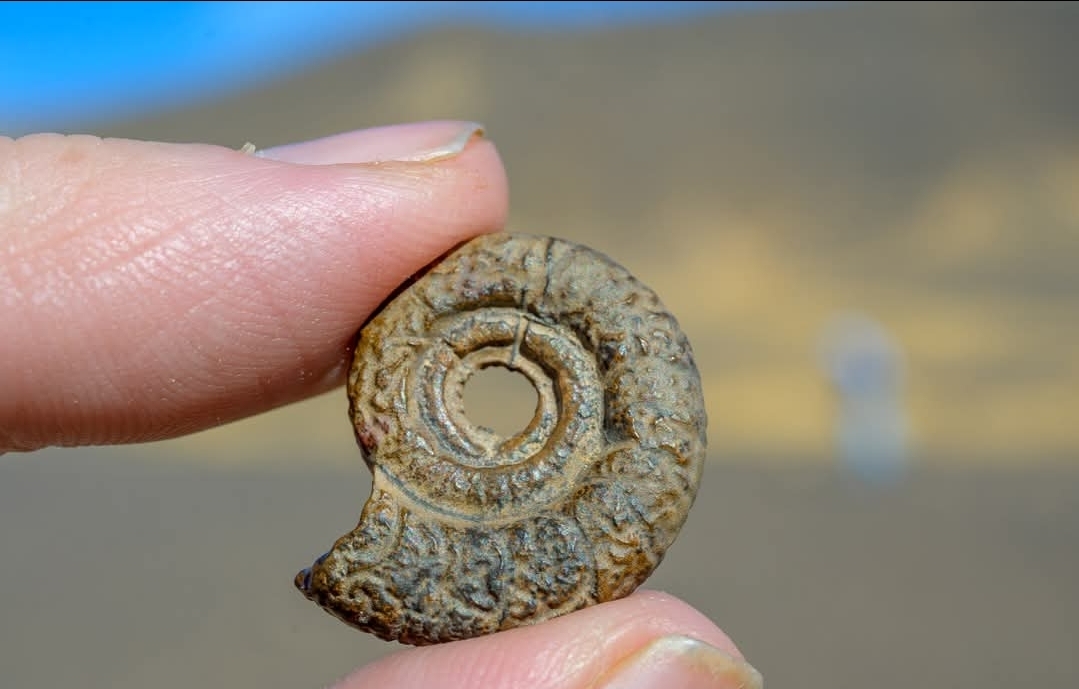
Before dawn we climb a high dune on foot to watch the Saharan sunrise unfold across Erg Chebbi — a slow, silent performance of colour that moves from deep violet to burning gold as the sun clears the Algerian border and floods the dune field with warm light. After a camp breakfast we spend the full day exploring by 4x4. The village of Khamlia is our first destination: a small community of Gnawa heritage from sub-Saharan Africa, whose sacred music tradition — performed on the guembri three-string bass lute and iron qraqeb castanets — has earned UNESCO Intangible Cultural Heritage recognition as part of the broader Gnawa music tradition. We also visit a nomadic Berber family living in the open hammada, whose seasonal migration patterns, tent construction methods, and herding traditions offer a window into a way of life that has sustained communities in this landscape for thousands of years. The afternoon is spent searching for fossils — ammonites, trilobites, and orthoceras — in the Paleozoic rock formations surrounding the erg, before returning to camp for a second night under the stars.
Day 6: Merzouga → Ziz Valley → Fes
We wake to our final desert sunrise before packing up and beginning the long northward drive that traverses the full geographic range of Morocco in a single day. Heading north through the Tafilalet region — historically the most important oasis crossroads of the trans-Saharan gold and salt trade — we enter the Ziz Valley, where the river has carved a long lush corridor of dense palmery through the limestone plateau, its ancient ksar villages and earthen granaries (agadirs) rising above the palm canopy. Climbing into the Middle Atlas, the air cools noticeably and the landscape transforms from arid hammada to cedar and holm-oak forest fragrant with resin. Near Azrou, Barbary macaques — Morocco's endemic wild primates, classified as vulnerable by the IUCN — often gather along the roadside, unbothered by vehicles and photogenic at close range. We descend through Ifrane and the Saiss plain to arrive in Fes in the late afternoon, settling into our medina riad as the muezzins call the evening prayer from the minarets of the world's oldest continuously inhabited medieval city.
Day 7: Guided visit of Fes
A licensed expert guide accompanies us for the full day in Fes el-Bali, the UNESCO World Heritage medina whose nine thousand lanes and fourteen hundred mosques have functioned continuously since the Idrisid dynasty established the city in the ninth century. The Bou Inania Madrasa, built in the mid-fourteenth century under the Marinid sultan Abu Inan, is our opening monument: its three-register decorative system — zellije mosaic tilework below, carved stucco arabesque in the middle zone, and cedar muqarnas and mashrabiya screens above — is the canonical expression of the Moroccan decorative arts at their most ambitious and refined. The labyrinthine souks that follow are organised by trade exactly as they were in the medieval period: the attarine spice and perfume market, the nejjarine woodworkers' caravanserai, the haddadine iron quarter. The Chouara tannery — largest and oldest in the city, where hides are processed in stone vats of lime, pigeon dung, and plant dyes including henna, saffron, poppy, and indigo — is best seen from the leather-shop balconies that ring its perimeter.
Day 8: Fes → Meknes → Volubilis → Chefchaouen
We leave Fes after breakfast and drive to the imperial city of Meknes, Morocco's answer to Versailles as conceived by Sultan Moulay Ismail in the late seventeenth century. The monumental Bab Mansour gate at the entrance to the medina — its facade covered in deep-green and turquoise zellige panels, flanked by marble columns seized from the nearby Roman ruins of Volubilis — is widely considered the most magnificent Moorish gateway in Morocco. Beyond it, the Lahdim Square gives onto the Kara Prison, the vast royal stables that once housed twelve thousand horses, and the enormous underground granaries of Heri es-Souani. From Meknes we drive to Volubilis, the UNESCO World Heritage Roman site established in the third century BC as one of the most distant outposts of the empire, where extraordinary in-situ mosaic floors — the Orpheus mosaic, the Diana and Actaeon scene, the Dionysiac procession — remain exposed to the open sky, flanked by the ruins of a triumphal arch, forum, and basilica. In the afternoon we continue north into the Rif Mountains to reach Chefchaouen.
Day 9: Free day in Chefchaouen
A full day in Morocco's most celebrated small city, entirely free of scheduled visits, to experience Chefchaouen at whatever pace you choose. The medina's famously blue streets — painted in an infinite range of cobalt, periwinkle, lavender, and sky blue — were originally attributed to the city's fifteenth-century Jewish community and have become so deeply embedded in the city's identity that residents repaint them each year before the summer tourist season. The Plaza Uta el-Hammam at the city's heart, shaded by café terraces and anchored by a simple sixteenth-century kasbah and a tall-minaret mosque, is the perfect hub for a long unhurried breakfast. From there the medina fans out in lanes of blue and white: craft shops selling Rif Mountains hemp rugs, woven blankets, and local goat cheese compete with artisan ceramics and leather goods. For those with energy, the hike up to the Spanish Mosque on the hill above the city rewards with panoramic views of the medina nestled in its mountain amphitheatre.
Day 10: Chefchaouen → Rabat → Casablanca
We leave the Rif Mountains and drive south and west toward the Atlantic coast. Our morning stop is Rabat, Morocco's capital — a city of remarkable elegance and cultural depth that many visitors overlook in favour of the more famous imperial cities. The Hassan Tower, the unfinished twelfth-century minaret of Sultan Yacoub al-Mansour's great mosque, rises beside a field of ancient broken columns and is one of the country's most evocative historical sites; beside it stands the Mausoleum of Mohammed V, whose white onyx interior sheltering the tombs of Morocco's post-independence monarchs is one of the finest examples of modern Moroccan craftsmanship. We also visit the Kasbah of the Oudayas, the seventeenth-century fortified quarter whose Andalusian garden and blue-white lanes overlook the Bou Regreg estuary. In the afternoon we continue south to Casablanca, Morocco's largest city, for the night.
Day 11: Casablanca → Essaouira
Our morning begins at the Hassan II Mosque, Casablanca's defining monument and one of the greatest pieces of twentieth-century religious architecture in the world. Built between 1986 and 1993 on a promontory over the Atlantic, it is the seventh-largest mosque on earth: its 210-metre minaret is the tallest religious structure in the world, its prayer hall accommodates 25,000 worshippers under a vast retractable roof, and a section of the prayer hall floor is made of glass so that worshippers can see the Atlantic waves breaking below. The esplanade, with its fountain gardens and ocean views, is an extraordinary place to spend a morning before we drive south along the Atlantic coast through the Doukkala plain and the UNESCO-biosphere arganeraie — the forest of endemic argan trees — to arrive in the wind-blown, blue-shuttered, UNESCO-listed medina city of Essaouira in the early afternoon, with time to explore its ramparts, fishing port, and art galleries before dinner.
Day 12: Essaouira → Marrakech
The final morning belongs to Essaouira: perhaps a walk along the ocean-facing skala rampart with the Atlantic wind at your face and the cannons pointing seaward, a last plate of freshly grilled sardines and sea bass at the port market, a visit to a cooperative where Berber women produce and sell pure argan oil directly, or a slow browse through the thuya-wood marquetry workshops where craftsmen turn local argan-root burls into the geometric inlaid boxes and chess sets that Essaouira has been famous for since the eighteenth century. After lunch we begin the two-and-a-half-hour drive east through the haouz plain, the arganeraie giving way to olive groves and market gardens as Marrakech approaches. We drop you at your hotel or transfer you directly to Marrakech Menara Airport for your departure flight, completing one of the most rewarding grand circuits Morocco has to offer.
This 12-day journey pairs immersive cultural experiences with moments of peaceful reflection: long medina walks, quiet desert nights, and coastal breezes offer a balanced pace. We design each day to highlight local crafts, music, and flavors so you experience Morocco beyond postcard sights.
Our local partners ensure accommodations that reflect regional charm — from riads with inner courtyards to comfortable mountain lodges and the signature desert camp. Staff are chosen for local knowledge and warm hospitality.
Meals are a mix of included breakfasts and dinners showcasing Moroccan cuisine; whenever possible we favor small family-run restaurants to support local communities and provide authentic tastes.
Roads cross dramatic landscapes: the Tizi n'Tichka pass, oasis valleys, and wide desert plains. We plan stops for views, short walks, and cultural encounters so travel itself becomes memorable.
If you prefer a different rhythm — a longer beach stay, extra hiking in the Atlas, or more time in Fes — we can adapt this private itinerary to match your travel style and priorities.
What is included?
- Private transport throughout the route.
- English-speaking driver/guide.
- 11 nights of accommodation in riads/hotels and a luxury camp.
- Dinners and breakfasts as per itinerary.
- Camel ride and 4x4 excursion.
- Local guides in Marrakech and Fes.
What is not included?
- Flights, lunches, drinks, and tips.
- Monument entrance fees.