
This 10-day tour is the grand Moroccan loop, a full immersion into the country's diversity and beauty. Starting and ending in vibrant Marrakech, this itinerary weaves through the four majestic imperial cities, plunges into the vast Sahara, and guides you across the most spectacular Atlas and coastal landscapes. It is the most complete experience for travelers who want the true essence of Morocco.
Highlights
- ✦A complete circuit starting and ending in Marrakech.
- ✦Explore the 4 imperial cities: Marrakech, Fes, Meknes, and Rabat.
- ✦Two nights in the Merzouga desert for a deeper experience.
- ✦Camel ride and 4x4 excursion across the Erg Chebbi dunes.
- ✦UNESCO sites: Ait Ben Haddou, Volubilis, and the medinas of Fes and Marrakech.
- ✦Atlantic coast route with stops in Rabat and Casablanca.
Detailed itinerary
Day 1: Arrival in Marrakech
We meet you at Marrakech Menara Airport and transfer you directly to your riad in the medina, the old walled city whose pink-rose pisé walls have given Marrakech its enduring nickname of the "Red City." Depending on your arrival time, there is every chance to step outside before dinner and experience your first taste of Jemaa el-Fnaa, the great open square at the heart of the medina that UNESCO has recognised as an element of Intangible Cultural Heritage. As dusk falls, the square transforms into an open-air theatre of storytellers performing in Darija, Gnawa musicians in vivid robes, henna artists, juice vendors, and the smoke rising from dozens of food stalls — a sensory welcome to Morocco that no amount of preparation quite prepares you for.
Day 2: Guided visit of Marrakech
A licensed local guide meets us after breakfast to unlock the layered history of Marrakech over a full day of exploration. We begin at the nineteenth-century Bahia Palace, whose name means "brilliance" — its elaborate painted cedar ceilings, octagonal reception halls, and ornamental gardens of orange trees and jasmine were built for Si Moussa, grand vizier to three sultans, and later lavishly extended by his son Ba Ahmed. The Saadian Tombs, sealed by Sultan Moulay Ismail in the seventeenth century and rediscovered only in 1917, shelter the remains of Saadian royalty beneath a Chamber of the Twelve Columns whose carved stucco and Italian Carrara marble are among the finest in North Africa. We then navigate the famous souks — each quarter traditionally devoted to a single craft, from copper-beaters and weavers to dyers and woodcarvers — and finish the afternoon on the vibrant Jemaa el-Fnaa square, watching the city's most ancient form of public life unfold around us.
Day 3: Marrakech → Ait Ben Haddou → Ouarzazate
We leave Marrakech early and begin the spectacular crossing of the High Atlas Mountains via the Tizi n'Tichka pass at 2,260 metres, Morocco's highest paved road, where panoramic views of rocky peaks and deep valleys open on every hairpin bend. Descending through the arid pre-Saharan landscape, we reach the UNESCO World Heritage site of Ait Ben Haddou — a spectacular fortified ksar of layered earthen architecture rising in tiered towers above the Ounila River. Used as a filming location for Gladiator, Game of Thrones, and Lawrence of Arabia, its honey-coloured mudbrick walls and crenellated ramparts are some of the finest surviving examples of southern Moroccan pisé construction. We cross the river by stepping stones and explore the ksar on foot before continuing to Ouarzazate, the "Hollywood of Africa," where we settle in for the night in a city that has become synonymous with big-screen epic landscapes.
Day 4: Ouarzazate → Todra Gorges → Merzouga (Desert)
We leave Ouarzazate and head east along the celebrated Route of a Thousand Kasbahs, where the road threads through a succession of fortified earthen towers, palmeries watered by ancient underground khettara irrigation channels, and kasbah villages that once guarded trans-Saharan trade caravans. A highlight of the day is a walk through the Todra Gorges, where the Todra River has spent millennia carving a narrow slot canyon through towering limestone walls that rise to nearly 300 metres above the valley floor — a dramatic geological formation beloved by rock climbers and trekkers. Continuing east, the landscape becomes increasingly arid and lunar as we approach the edge of the Sahara near Merzouga, home to the spectacular Erg Chebbi dunes. As the late-afternoon sun paints the sand in shades of amber and ochre, we mount our camels and ride slowly across the dunes — some cresting at 150 metres — to reach our desert camp for a night under an immense, star-crowded Saharan sky.
Day 5: Merzouga Desert exploration
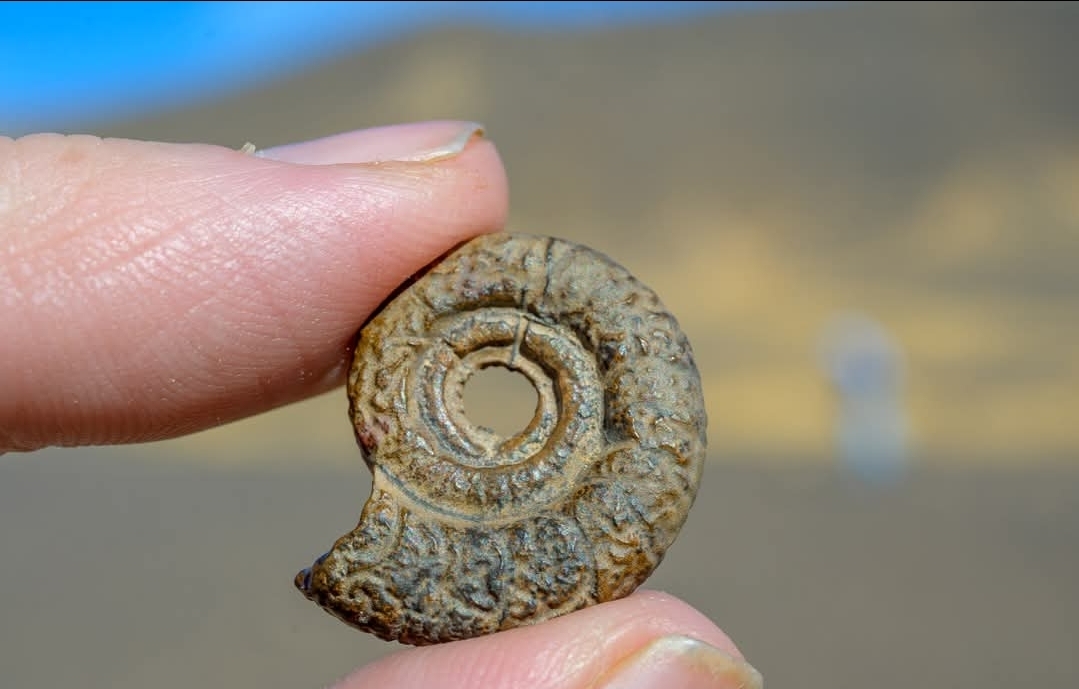
We rise before sunrise to climb a high dune on foot and watch the light break over the Erg Chebbi — the moment the sand shifts from deep purple to burning gold is one of the most photographed sunrises in Morocco. After a camp breakfast, we board a 4x4 for a full day of deep-desert exploration. Our first stop is the village of Khamlia, home to a small community of Gnawa descendants of sub-Saharan origin whose trance music — driven by the guembri bass lute and iron qraqeb castanets — is both hypnotic and deeply spiritual. We then visit a nomadic Berber family living in the open desert, sharing mint tea and learning about a way of life sustained entirely by seasonal migration and livestock herding. In the afternoon we search for ammonite and trilobite fossils embedded in the Paleozoic rock of the surrounding hammada plateau — evidence that this desert was once a shallow sea — before returning to camp for a second magical evening under the stars.
Day 6: Merzouga → Ziz Valley → Ifrane → Fes
After the early desert sunrise ritual and breakfast, we pack up and begin the long northward drive that takes us back across the great altitudinal sweep of Morocco in a single day. The route first crosses the lush Ziz Valley, a long palm-fringed oasis corridor watered by the Ziz River and flanked by ancient ksar villages and earthen granaries called agadirs. As we climb into the Middle Atlas, the landscape greens dramatically and the scent of cedar and juniper fills the vehicle. Near Azrou we pass through forests of Atlas cedar that are home to Barbary macaques — Morocco's endemic wild primates — which often sit beside the road or clamber through the trees within arm's reach. We stop briefly in Ifrane, a surprising Alpine-style town built during the French Protectorate at 1,650 metres elevation, before descending into the Saiss plain and arriving in Fes in the late afternoon.
Day 7: Guided visit of Fes
A full day with a licensed local guide in Fes el-Bali, the UNESCO-listed medieval medina that has functioned continuously since its founding in the ninth century under the Idrisid dynasty. We start at the Bou Inania Madrasa, the fourteenth-century Marinid theological college whose interior is an extraordinary layering of zellige mosaic tilework, carved cedar, and sculpted stucco — considered by many scholars the pinnacle of Moroccan decorative arts. Our guide leads us through the labyrinthine souks, each alley still dedicated to a particular trade as it has been for centuries: the qisaria textile market, the haddadine iron-workers, the nejjarine woodworkers whose caravanserai courtyard houses a beautifully restored museum of wooden artisanry. The undisputed highlight is the Chouara tannery, the oldest and largest in the city, where leather is still treated in stone vats using pigeons' dung, quicklime, and natural plant dyes — best viewed from the balcony of an adjacent leather cooperative. We finish at the Al-Qarawiyin Mosque, founded in 859 AD, considered the world's oldest operating university and the spiritual heart of Fes.
Day 8: Fes → Meknes and Volubilis → Rabat
We leave Fes in the morning and drive west to the imperial city of Meknes, founded as a capital by Sultan Moulay Ismail in the seventeenth century and modelled in ambition on Versailles. We pass through the monumental Bab Mansour gate — considered the most magnificent Moorish gateway in all of Morocco, its face covered in zellige panels and carved marble columns plundered from Volubilis — and explore the vast Lahdim Square and the entrance to the royal stables that once housed twelve thousand horses. Just a short drive away, the Roman archaeological site of Volubilis is Morocco's most extensive and best-preserved reminder of its ancient past. The UNESCO-listed ruins include a triumphal arch dedicated to Emperor Caracalla, stunning in-situ mosaic floors depicting Bacchic processions and hunting scenes, and the remnants of a basilica, forum, and public baths dating from the second and third centuries AD. In the afternoon we continue west to Rabat, Morocco's elegantly restrained capital on the Atlantic coast, for an overnight stay.
Day 9: Rabat → Casablanca → Marrakech
We spend the morning exploring Rabat's UNESCO-listed historic core. The Hassan Tower — the unfinished twelfth-century minaret of Sultan Yacoub al-Mansour's great mosque, surrounded by a forest of broken columns — is one of Morocco's most evocative monuments. Beside it, the Mausoleum of Mohammed V shelters the tombs of Morocco's first post-independence king and his two sons beneath a white onyx ceiling with hand-carved muqarnas, guarded by royal sentinels in traditional ceremonial dress. We walk down through the medina to the Kasbah of the Oudayas, the fortified quarter built above the estuary of the Bou Regreg river, whose blue-and-white painted lanes and Andalusian garden recall the Moorish refugees who settled here after the fall of Granada in 1492. After lunch, we drive south along the Atlantic motorway to Casablanca, where we stop at the esplanade of the Hassan II Mosque to take in its extraordinary oceanfront setting and towering 210-metre minaret before completing the journey back to Marrakech.
Day 10: Departure from Marrakech
The final morning in Marrakech belongs entirely to you. Whether you choose a last unhurried wander through the souks in search of handwoven scarves, argan oil, or silver jewellery, a long riad breakfast in the courtyard sunshine, a traditional hammam session with a kessa scrub and black soap, or simply a coffee at a terrace café watching the medina come alive around you, the city provides a fitting farewell. At the time we agree together, we collect you from your accommodation and transfer you comfortably to Marrakech Menara Airport for your onward departure — a rewarding conclusion to one of the most complete journeys Morocco has to offer.
This grand loop is ideal for travelers who want a fuller understanding of Morocco, not just a quick overview. By linking imperial heritage, mountain scenery, desert silence, and Atlantic monuments, it creates a journey that feels rich and complete.
The accommodations on this route are chosen to support that feeling of immersion, mixing classic riads, comfortable hotels, and a desert camp stay with a memorable atmosphere. Each overnight stop adds its own mood to the experience.
Meals bring another layer of discovery, from medina dining and Berber-style dinners to fresh produce and slow-cooked Moroccan specialties. We always aim for places where the food and setting feel rooted in the region.
Transfers between destinations are broken up with well-chosen scenic and cultural stops so that each day remains engaging. Rather than simply covering distance, the route invites you to appreciate how Morocco changes from one province to the next.
Because this is a private tour, the circuit can be reshaped around your interests. Whether you want more time in Marrakech, a longer desert stay, or higher-end accommodations throughout, we can adapt it with ease.
What is included?
- Private transport throughout the circuit.
- English-speaking driver/guide.
- 9 nights of accommodation in riads/hotels and desert camp.
- Dinners and breakfasts as per itinerary.
- Camel ride and 4x4 excursion.
- Local guides in Marrakech and Fes.
What is not included?
- Flights, lunches, drinks, and tips.
- Monument entrance fees.
- Personal expenses.
Frequently asked questions
Is this tour very intense? It is a very complete tour covering long distances. However, it is designed to be enjoyable, with multi-night stays and regular stops. A free day in Marrakech also helps balance the pace.
Is this tour a good option if I want to see everything? Absolutely. This circuit is one of the most efficient ways to experience Morocco's diversity in a single trip.
Can accommodation be customized? Yes, we offer different accommodation categories. Ask us to tailor the trip to your budget and style, from charming riads to luxury hotels.